
The Crew That Ate to Death: The Terrifying Nutritional Collapse of the Kronprinz Wilhelm
The Nutritional Catastrophe of the German Commerce Raider Kronprinz Wilhelm: Demineralization, Acid-Base Imbalance, and the Limits of Caloric Sufficiency in Alfred W. McCann’s "The Science of Eating" (1919)
In pages 193–215 of "The Science of Eating" (1919), Alfred W. McCann presents one of the most compelling real-world demonstrations of nutritional failure in modern history: the 255-day voyage of the German auxiliary cruiser Kronprinz Wilhelm. Despite consuming a calorically abundant diet of white flour, refined sugar, preserved meats, and canned goods, the crew of approximately 500 men suffered progressive demineralization, chronic metabolic acidosis, edema, neuritis, heart dilation, and near-total incapacitation. McCann uses detailed records from the ship’s surgeon, Dr. Perrenon, and the cook’s daily menus to argue that the systematic removal of alkaline mineral salts through food refinement creates an acid-forming environment that the body cannot sustain. This article provides a comprehensive reconstruction of the voyage, integrates McCann’s key quotes, expands on the biochemical mechanisms, and places the case within the critical 1912–1920 vitamin discovery timeline. The Kronprinz Wilhelm stands as a powerful historical case study supporting McCann’s thesis that quality, not merely quantity, of food determines health.
EDITOR'S NOTE
When I was diagnosed with a serious autoimmune disease, a specialist told me there was no cure. Fortunately, another doctor who deeply understood the power of nutrition shared the remarkable story of the Kronprinz Wilhelm with me. That story changed everything.
I decided to trust food as medicine instead of relying on pharmaceuticals. To my amazement, the worst symptoms disappeared in just six weeks. It took more than a year, however, to fully rebuild my health and regain what I had lost.
I never want to go through that experience again — and I now understand how much damage poor eating habits can cause. Eat real, healthy food, my friend. Your body will thank you for it! – Editor Max Allander
McCann’s Purpose and Historical Context
Alfred Watterson McCann (1879–1931), a journalist and nutrition reformer, wrote *The Science of Eating* amid the nutritional crises of World War I. Published in 1919, the book critiques the industrialization of food—particularly the refinement of grains, sugars, and fats—that strips away essential mineral salts and “accessory food factors.” McCann’s central argument is that modern diets create chronic low-grade metabolic acidosis by generating excess acid ash while removing alkaline minerals needed for neutralization.
Pages 193–215 form a self-contained case study. Here, McCann reconstructs the voyage of the Kronprinz Wilhelm, a luxury liner converted into a commerce raider. Operating from August 3, 1914, to April 11, 1915, the ship captured or sank 15 Allied vessels and seized their provisions. McCann obtained precise dietary records from the ship’s cook and medical observations from Dr. Perrenon, the chief surgeon. He presents the episode as a near-perfect “controlled experiment at sea.”
The Voyage and the Captured Diet
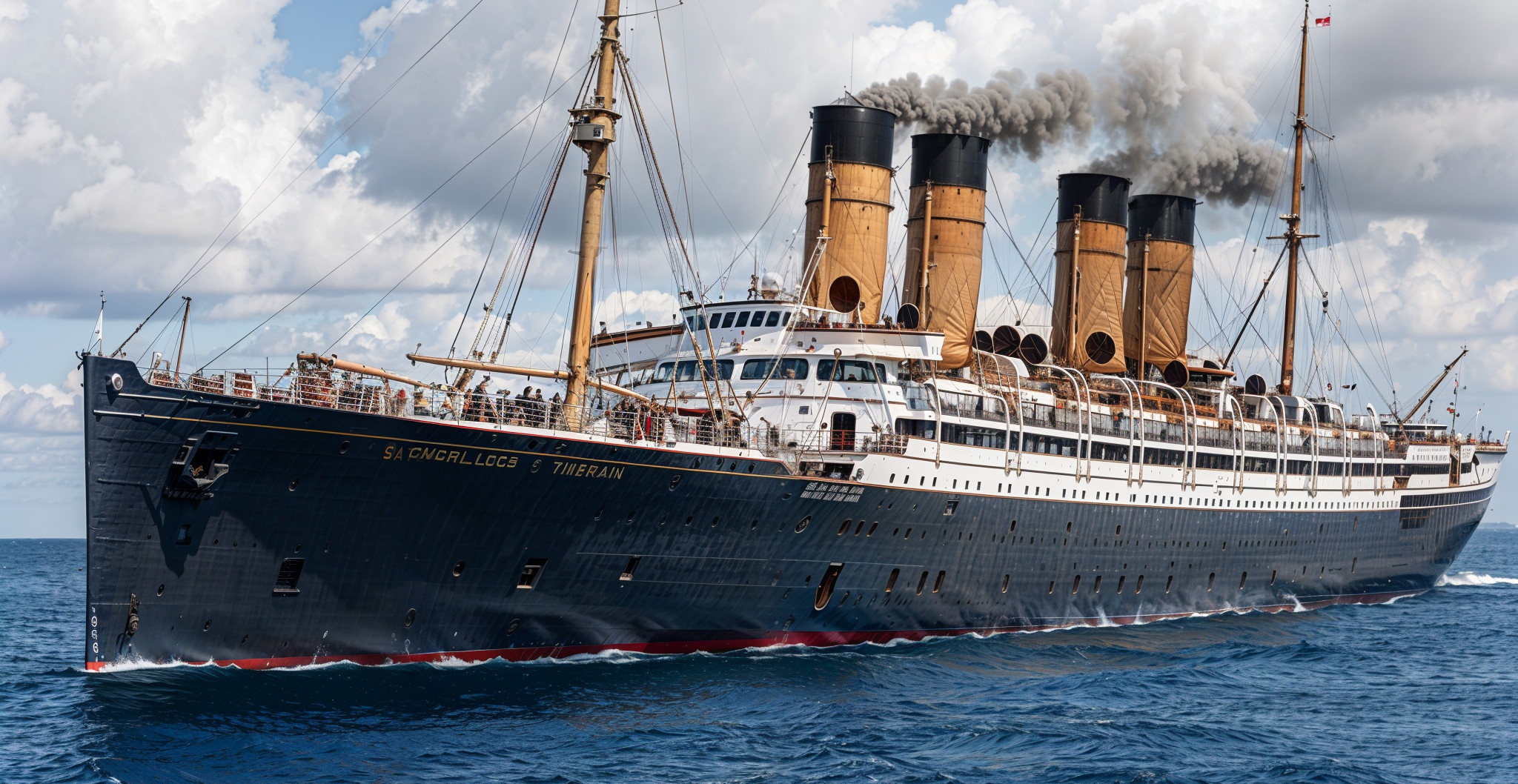
The Kronprinz Wilhelm slipped out of New York harbor on August 3, 1914, and began preying on Allied shipping in the Atlantic. Over 255 days, it accumulated vast stores from captured ships, most notably the French steamer La Correntina, which provided approximately 150,000 pounds of corned beef and other meats. Additional hauls included white flour, refined sugar, oleomargarine, condensed milk, sweet biscuits, cakes, potatoes, limited canned vegetables, and various preserved meats.
McCann meticulously reconstructs the daily menus using the cook’s chart, verified by Dr. Perrenon. The enlisted crew’s diet was almost entirely composed of refined, acid-forming foods, while officers received slightly more fresh produce.
McCann’s Description of the Diet:
“The daily food of the crew prescribed by the cook’s chart, and verified by the ship’s surgeon, Dr. Perrenon, consisted almost exclusively of white-flour products, sugar, preserved meats, oleomargarine, condensed milk, and canned goods. The potatoes were peeled and boiled or fried. The small quantity of fresh vegetables captured was consumed almost entirely by the officers.”
Representative Daily Menu (as documented by McCann):
-
- Breakfast: Cheese or oatmeal with condensed milk, white bread with oleomargarine, fried potatoes, coffee, and sugar; or sausage, white bread, butter, fried potatoes, coffee, condensed milk, and sugar.
- Dinner: Pea soup, canned vegetables served in their tin juice, roast beef, boiled potatoes, white bread, coffee, condensed milk, and sugar.
- Afternoon: Huntley & Palmer’s fancy biscuits and sweet cakes with coffee and sugar.
- Supper: Fried steak, cold roast beef, corned beef hash, or beef stew with potatoes; white bread and butter; coffee, condensed milk, and sugar.
McCann stresses the caloric density of the diet (estimated 3,000–4,000 calories per man daily) while highlighting its critical lack of alkaline mineral salts.
The Onset and Progression of Symptoms
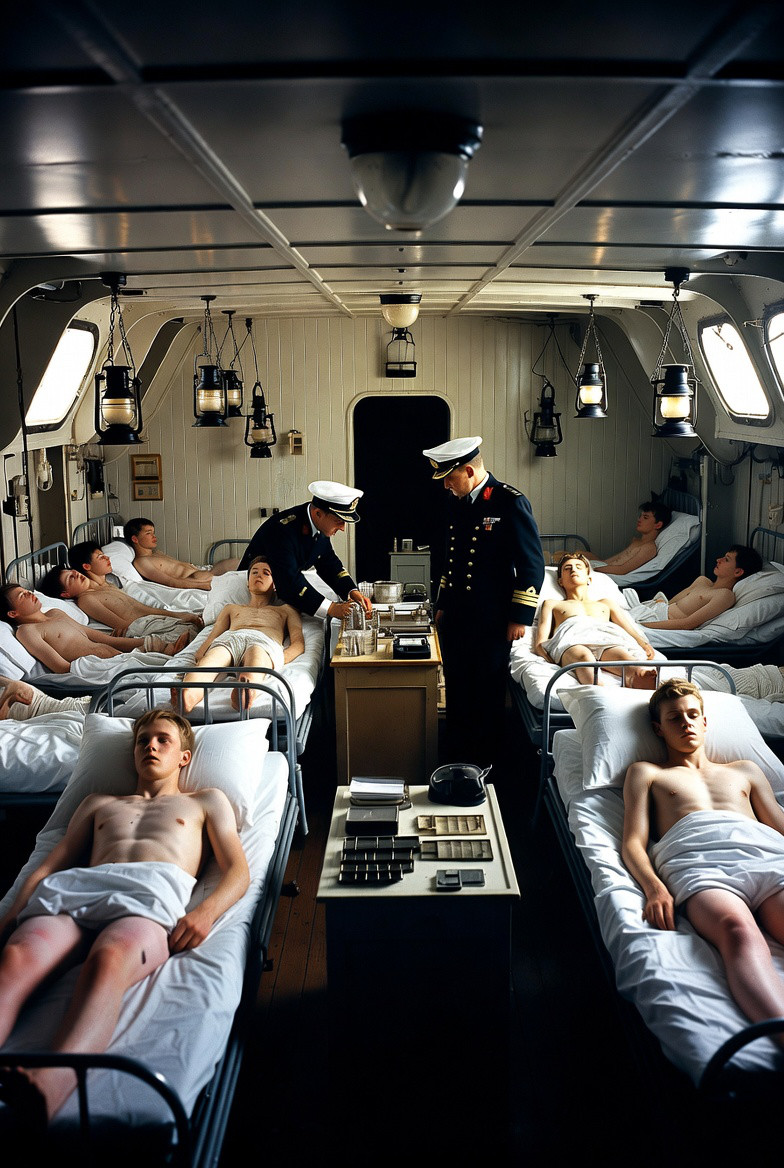
For the first several months, the crew appeared healthy. This latent period allowed the body to draw on stored mineral reserves. By late February 1915 (around day 200), symptoms emerged. By April 11, when the ship was interned in Hampton Roads, Virginia, over 110 men were prostrate, 50 could not stand, and nearly the entire crew showed severe debility.
McCann on the Crew’s Collapse:
“After 255 days out of port, 110 of her crew were prostrate… 50 could not stand… The men complained of swollen ankles, shooting pains below the knees, and progressive weakness.”
Clinical manifestations included edema, neuritis, paralysis, dilated hearts, anemia, muscle atrophy, joint effusions, and general prostration. Dr. Perrenon initially diagnosed scurvy but later recognized the broader “impoverished blood” state caused by the diet.
McCann on the Officers’ Relative Health:
“We had many cases of pneumonia, pleurisy, and rheumatism among the men. They seemed to lose all resistance long before the epidemic broke out.” (quoting Dr. Perrenon)
Biochemical Mechanisms:
Demineralization & Acid-Base Imbalance
McCann’s most insightful contribution is his explanation of the underlying biochemical processes. He uses the ship’s data to demonstrate how a high dietary acid load forces systemic demineralization.
McCann on the Intensity of the Cause:
“Here was a crew of men living in the open air, eating the staple articles of diet for which the American scientists claim so much. Fresh meat, all the fat and cheese they could eat, boiled potatoes, canned vegetables, condensed milk, sugar, tons of fancy cakes, biscuits and white bread, and all the coffee and tea they could drink constituted their diet.”
On the Absence of Offsetting Foods:
“On the Kronprinz Wilhelm the intensity of the cause determined the gravity of the effect. There was no outside assistance in the form of offsetting fresh vegetables and fruits or whole grain foods to lessen that intensity.”
1. Dietary Acid Load
The crew’s diet generated a high Potential Renal Acid Load (PRAL) through refined grains, sugars, and animal proteins. Without base-forming foods, net acid production was extreme. McCann’s term “acid ash” precisely describes this phenomenon.
2. Compensatory Demineralization
To maintain blood pH, the body mobilized alkaline mineral salts from its own tissues:
-
- Bone Resorption: Release of calcium, magnesium, and phosphate from hydroxyapatite crystals (McCann’s “lime salt abstraction”).
- Intracellular Electrolyte Shifts: Release of potassium and magnesium from muscle and nerve cells, leading to hypokalemia and hypomagnesemia.
- Renal Compensation: Increased ammonium excretion, which cannot be sustained without dietary minerals.
Symptoms appeared only after mineral reserves were exhausted (approximately 200+ days).
3. Synergistic Micronutrient Deficiencies
The diet also induced:
-
- Vitamin C depletion → impaired collagen synthesis and edema.
- B-vitamin deficiencies (especially thiamine) → polyneuritis and paralysis.
- Potassium and magnesium deficits → muscle weakness and cardiac dilation.
4. The Vicious Cycle
-
- High acid load → mineral withdrawal → impaired cellular metabolism → additional acid production → accelerated collapse.
5. Rapid Recovery as Proof
After internment, remedial alkaline foods (bran water, vegetable soups with potato skins, citrus, apples, whole-wheat bread) were introduced. Symptoms began resolving within days.
McCann on Recovery and the Surgeon’s Acknowledgment:
“With respect to the disease we have on board we are satisfied now that this condition is due to the impoverished character of our food supply. The remedy you have suggested is obviously the correct one and I shall immediately order its application.” (quoting Dr. Perrenon)
Historical and Scientific Significance
McCann situates the Kronprinz Wilhelm within the broader nutritional crises of World War I. The raider’s voyage offered a cleaner experiment than battlefield conditions. His work prefigures modern concepts of chronic metabolic acidosis, PRAL, and diet-induced bone and muscle catabolism.
McCann’s Concluding Verdict:
“The Kronprinz Wilhelm furnished that experiment. There can be no greater or more picturesque proof of the folly of unbalancing food by refinement, of the folly of ignoring the meaning of the salts, colloids and vitamines natural to all unprocessed foods; of the folly of claiming for high caloric foods the absurd virtues they do not possess.”
Vitamin Discovery Timeline and McCann’s Place in Nutritional Science
McCann wrote "The Science of Eating" at the exact moment when the concept of vitamins was emerging, yet still poorly understood. The timeline below shows how his work intersected with—and powerfully illustrated—the new science:
1747 – James Lind publishes the first controlled trial showing citrus prevents scurvy (vitamin C).
1880s – Christiaan Eijkman in Java demonstrates that polished rice causes beriberi in chickens; the disease is cured by rice bran (later identified as thiamine/B1).
1912 – Casimir Funk coins the term “vitamine” (vital amine) while isolating the anti-beriberi factor from rice bran. This marks the birth of the vitamin concept.
1913 – Elmer McCollum and Marguerite Davis discover the first fat-soluble vitamin, later called vitamin A.
1915–1918 – The *Kronprinz Wilhelm* sails and collapses. McCann is simultaneously gathering data on the ship while the vitamin letters (A, B, C) are being assigned.
1919 – McCann publishes *The Science of Eating*, using the raider’s story as living proof that “vitamines” and mineral salts are essential. He repeatedly uses the word “vitamines” and “accessory food factors,” showing he is fully aware of the new discoveries.
1920 – Vitamin C is isolated and named.
1920s–1930s – The remaining vitamins (D, E, K, and the full B complex) are identified and synthesized.
McCann’s genius lies in timing. While laboratory scientists were isolating single factors in test tubes, McCann presented a dramatic, large-scale human experiment showing the same deficiencies in real time. The crew’s symptoms—scurvy-like bleeding and edema (vitamin C), polyneuritis and paralysis (B1/thiamine), and general debility—were textbook examples of the very diseases Funk, Eijkman, and McCollum were studying. By documenting the diet, symptoms, and rapid recovery with whole foods, McCann bridged the gap between emerging vitamin theory and practical human nutrition.
In Summary ...
The saga of the Kronprinz Wilhelm does not merely illustrate nutritional failure — it condemns it. For 255 days, a crew of healthy young men consumed what the caloric science of their era deemed an adequate diet: mountains of meat, white bread, sugar, and preserved foods. Yet this “plentiful” ration proved lethal. Slowly, inexorably, the absence of alkaline mineral salts triggered a cascade of demineralization, acid-base collapse, and systemic breakdown that no amount of calories could prevent.
McCann’s meticulous documentation — the cook’s menus, Dr. Perrenon’s clinical notes, the delayed onset of symptoms, and the dramatic recovery once alkaline foods were restored — delivers an unanswerable indictment of refined, demineralized diets. The crew’s swollen limbs, paralyzed bodies, and dilated hearts were not the result of infection, starvation, or overwork. They were the direct, predictable consequence of eating food stripped of its life-sustaining mineral essence.
In the century since McCann wrote these pages, the same forces of refinement have only intensified. White flour, refined sugar, and ultra-processed foods now dominate global diets. The Kronprinz Wilhelm did not sink because of enemy guns; it was crippled by the very provisions meant to sustain it. Its story stands as a floating warning across time: a diet may satisfy hunger and deliver calories, yet still starve the body at the cellular level.
McCann’s final verdict remains as urgent today as it was in 1919. Humanity cannot long survive on demineralized calories alone. Until we restore the mineral integrity and alkaline balance of our food, we will continue to witness — on both individual and societal scales — the same slow, invisible catastrophe that nearly destroyed the crew of the Kronprinz Wilhelm.
The science of eating, McCann reminds us, is ultimately the science of survival.
••••••
Primary Source: McCann’s Book
- **Full digitized version of "The Science of Eating" (1919)** — The complete book is freely available on the Internet Archive. The Kronprinz Wilhelm narrative appears primarily in the section around pages 193–215 (searchable in the online reader).
https://archive.org/details/scienceofeatingh00mcca - **Open Library entry** (alternative access, with borrowing options):
https://openlibrary.org/works/OL197127W/The_science_of_eating
Direct Excerpts and Related McCann Texts
- **Detailed excerpt on the Kronprinz Wilhelm** from McCann’s related work "This Famishing World" (1918), which expands on the same story (including menus and Dr. Perrenon’s observations):
http://journeytoforever.org/farm_library/Famish/famworld4b.html - **Another excerpt from "This Famishing World" ** (includes more on the ship’s diet and recovery):
https://www.zetatalk10.com/docs/Health/Nutrition/This_Famishing_World_1918.pdf (PDF download)
Historical Context on the Ship and Surgeon
- **Wikipedia entry on SS Kronprinz Wilhelm** — Provides naval history, internment details, and a brief mention of Dr. Perrenon and crew illness (scurvy-like symptoms and loss of resistance):
https://en.wikipedia.org/wiki/SS_Kronprinz_Wilhelm - **Hampton History Museum post** on the ship’s arrival and crew illness in 1915:
https://www.facebook.com/HamptonHistoryMuseum/
Supporting Resources on Nutritional Science and Related Cases
- **Nutritional edema and war-related deficiencies** (historical review of “war edema” during WWI, similar to the crew’s symptoms):
https://pubmed.ncbi.nlm.nih.gov/6343464/ (Emma Kohman and early history of nutritional edema) - **One Page in the History of Starvation and Refeeding** — Discusses WWI/WWII famine and refeeding effects, providing modern context for McCann’s observations on rapid recovery:
https://pmc.ncbi.nlm.nih.gov/articles/PMC11065092/ - **Chronic metabolic acidosis and dietary interventions** — A 2024 systematic review that aligns with McCann’s acid-base arguments (useful for modern validation):
https://www.researchgate.net/publication/
Help Us Make a Difference: Support Our Efforts with Your Gift!
This site is funded by individual donations. If you like what you see and feel that it is worthy of your support, CLICK the button below and see how you can participate. We want to thank you in advance for sharing the site with others and any funding that you may help with.
And we have teeshirts for sale as well

Help Fund This Site
Our website is exclusively funded by generous donations through GiveSendGo and cryptocurrency contributions. By utilizing GiveSendGo and accepting crypto, we ensure secure and transparent funding for our operations. Your support through these platforms helps us maintain and grow our online presence. Thank you for your invaluable support and generosity!
Bitcoin 

bc1qq6tp9v3xa4p478xgmxu96wycdnfls7demy5zw9
Ethereum


0xD72315E9Adcc5d487157Ca49819eE67bd4369219
Tether

0xD72315E9Adcc5d487157Ca49819eE67bd4369219

Support AVO ...
with your purchase of one or more of these clean, stylish and colorful graphic teeshirts. Many styles, colors and sizes of shirts available.
With gratitude,
The AVO Team



Recent Articles

The Ultimate Guide to Cooking Pans: Safety, Pros, and Cons
Why Picking the Best Cooking Pans for Your Health Matters! Cooking pans are the unsung heroes of every kitchen, quietly shaping the success of meals from breakfast scrambles to gourmet dinners. The right pan can elevate flavors, ensure even cooking, and even safeguard...

Rediscovering the Wonders of Castor Oil
Castor Oil: A Look at its uses in Health and Medicines What is Castor Oil? Castor oil is a pale yellow vegetable oil extracted from the seeds of the Ricinus communis plant, commonly known as the castor bean. Though native to Africa and India, this hardy plant now...
Amazing Peppers
GREAT TASTE & INCREDIBLE HEALTH BENEFITS You can spice up your healthy diet and make it more flavorfuland enjoyable by adding these healthy veggies! One of common reasons that people can’t seem to commit to a healthy diet is their misguided idea that a healthy dish is...